Parent testimonial placeholder
An approved parent perspective will appear here after consent and content review.
THAILAND · BLOOM READING CENTRE
Reading opens the door. Together, we develop comprehension, vocabulary, grammar, analysis, writing and communication · and connect them to everyday life.

01 / READING AT BLOOM
At Bloom, students don't just read to answer questions. They learn to think with what they read.
A single text becomes a starting point for noticing language, weighing ideas and expressing a point of view.
ILLUSTRATIVE PASSAGE · NOT APPROVED CURRICULUM
A public square is more than an empty space between buildings. When a square has shade, places to sit and safe paths, people are more likely to spend time there. A bench can become a place to rest, read or talk with a neighbour. Open areas can give children room to play and communities room to gather.
Yet the same design will not suit everyone. A busy square may feel lively to some people and uncomfortable to others. Planning a useful public space therefore means asking who will use it, listening to different needs and thinking carefully about how those needs can share one place.
Focus on the central idea
What makes a public space useful? Identify the central idea, then choose two details that support it. Explain how shade or a bench can respond to people’s needs.
Focus on language choices
“More likely to” describes a greater possibility, not a promise. Why use this phrase instead of “will”? Then notice how “yet” introduces a different point of view.
Focus on a new context
Imagine improving a shared space near your home or school. Which need would you prioritise? Discuss your choice, then write three sentences giving a reason and acknowledging another point of view.
02 / OUR LEARNING APPROACH
Every student brings different strengths and needs. Teachers identify where support is needed, with time to prepare, take part and learn independently.
Explore the lesson and organise your ideas before class.
Read, question, discuss and practise with a teacher’s guidance.
Revisit vocabulary, consolidate understanding and reflect on what you’ve learned.
03 / THE PERSON BEHIND BLOOM
Ajarn Orm · Natthaphorn Sukkasem
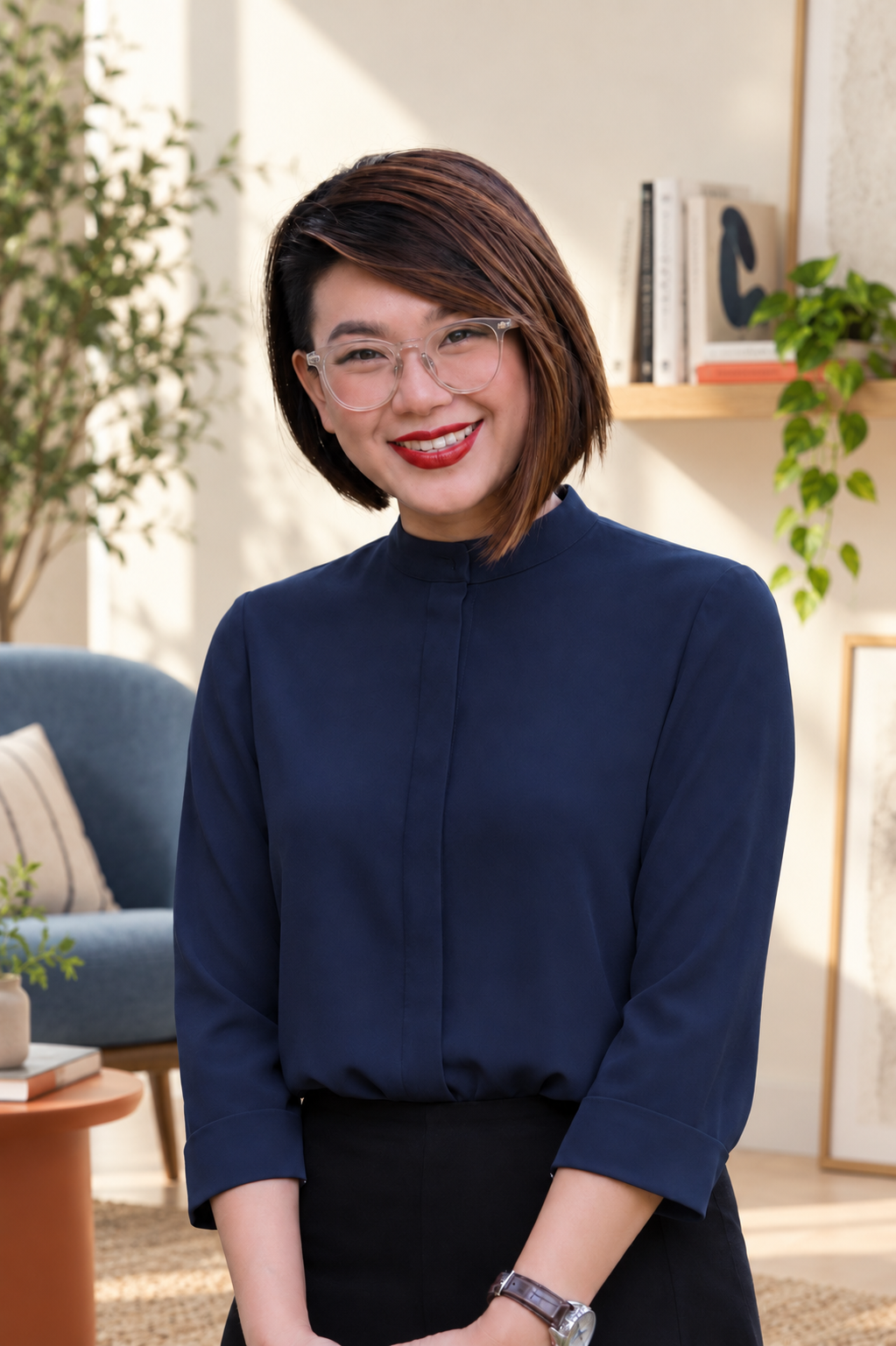
Years in education. One focus: understanding.
Since 2007, Ajarn Orm (Natthaphorn Sukkasem) has worked across classrooms, universities and educational organisations. Her experience spans curriculum design at Generation, educator development at Teach For Thailand and co-founding Choo's Tutoring School.
Now a lecturer at Chiang Mai University, with a Master's degree in Teaching English, she brings this experience to an approach that values understanding, not simply memorising information or finding the right answer.
Bloom brings reading, thinking and expression together. A text becomes a starting point for deeper understanding, confident communication and the ability to think independently.
04 / OUR PROGRAMMES
Choose a level to see its school-year reference and how the two curriculum components fit together.
LEVEL 01 / 05
School-year reference: Mathayom 1
The right level depends on your child's assessed English proficiency, not school year alone.
A and B explore different vocabulary themes and fields of study at broadly comparable difficulty. A is not automatically easier, and students do not necessarily need A before B. Together, they cover the curriculum of the selected level.
05 / YOUR NEXT STEP
Whether your child is building confidence in English or ready for a new challenge, the right starting point matters. Explore our programmes and learn how Bloom approaches placement and progression.
Explore programmes05 / THE BLOOM EXPERIENCE
This space is reserved for genuine experiences shared with permission. No testimonials, names, ratings or achievements have been invented.
An approved parent perspective will appear here after consent and content review.
An approved student reflection will appear here after consent and content review.
Space for an approved Bloom classroom photograph. No actual students are pictured.